Why should you use Food-Grade Silicone?

Silicone compliant with Food Regulations, what are the features? There are plenty of options when it comes to sealing materials. However, in the food processing industry, it is very important that each element that interacts with the seal is left untouched. Furthermore, despite the fact that silicone is ‘practically’ non-toxic, only a particularly developed food grade silicone is suitable for […]
Read MoreFinite Element Analysis (FEA)
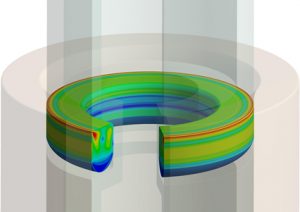
Anticipative behavioural techniques to imitate real-life settings Finite Element Analysis (FEA) is a computer-based manipulation. It is used to examine engineering applications and sealing elements to perceive their behaviour under several circumstances. This analysis, therefore, entails Finite Element Modelling (FEM). FEM is frequently used for new element design, or to improve an existing product design. Furthermore, virtual medium allows engineers to […]
Read MoreFDA Rubber Materials

Selecting The Best FDA Rubber Material The following article provides an overview of all M Barnwell Services popular FDA Rubber Compounds, which are also compliant with EC1935/2004 & EC2023/2006 Regulations. Fluorocarbon (Viton®/FKM) For high-temperature and chemical resistance. It’s transparent underwater but does not absorb it. Working temperature scope is measured to be between -20°C and +205°C (intermittent/compound-specific between -45°C and […]
Read MoreWhat is a Polymer?

What is a Polymer? In Michael M. Coleman and Paul C. Painter’s book, Fundamentals of Polymer Science: An Introductory Text, they described a Polymer as a large molecule, or macromolecule, composed of many repeated subunits. Polymer actually means “many-parts” (poly-, “many” + -mer, “parts”) in Greek. It can be both synthetic and natural. Natural Polymers Synthetic Man Made Polymers Rubbers […]
Read More